


The world is dealing with drought and its consequences in the civil, agricultural, industrial and environmental spheres. In an already dramatic context, the numbers relating to water losses in the distribution network are alarming and it is becoming increasingly urgent to adopt behaviors to preserve the precious water resource and intervene on existing infrastructures by exploiting the potential of new technologies.
Drought in the world: the data
Although water covers over 70% of our planet, fresh water represents a very small part of the total water, only about 2.5%. There are about 200 countries and a billion people affected by the desertification process; since 2000 the number and duration of drought events has increased by 29% and the prolonged lack of water is today the natural disaster that has the greatest number of victims: about 650,000 deaths from 1970 to 2019. To which are added more than 2.3 billion people who face severe water stress annually. From an economic point of view, the consequences are also considerable: in less than 20 years the drought has caused losses of over 120 billion dollars worldwide.
The problem of waste of fresh water
In addition to weather events that are difficult to predict, the causes of the water crisis include bad choices and negligence. We also need to rethink our behaviors related to water consumption. According to the Unicef-WHO Report, the disparities in water consumption around the world are enormous: it goes from 425 liters per day for an American to 10 liters for an inhabitant of Madagascar.
Average estimates indicate a consumption of 350 liters of water per day for a Canadian family, 165 for a European and 20 liters for an African family. In 29 countries around the world, 65% of inhabitants do not have the water needs available: we are talking about 1.2 billion people in the world who do not have enough drinking water.
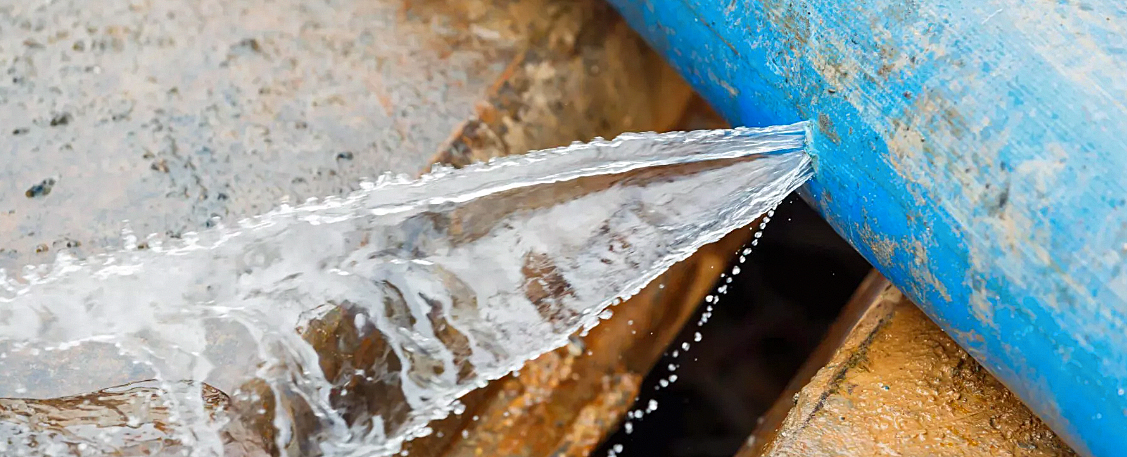
Another serious problem concerns the water losses from the aqueducts. Distribution systems in many parts of the world are not efficient enough. New technologies and systems for leak detection offer great opportunities for efficiency improvements.
Virtuous examples of fighting drought: the Hera Group and Acquedotto del Fiora Spa case studies
The use of cutting-edge technologies revolutionizes water leakage detection operations and the management of maintenance interventions on pipelines.
The Italian multiutility HERA S.p.A has adopted an innovative approach to guide the maintenance and survey activities on its aqueduct network over 35,000 km long:
The solution allowed HERA to focus investments where it was most urgent, to identify potentially double the losses compared to previous methods and to achieve significant savings on maintenance and repair costs.
The public service of Acquedotto del Fiora has also implemented geospatial artificial intelligence : the use of satellite data combined with those relating to the ground and with historical data on pipe failures have provided a fundamental tool for understanding the probability of failure of pipelines.
The development of cutting-edge technologies for better management of water resources is the core business of ISOIL Industria.
Do not hesitate to contact our specialists: they will provide you with information about technologies for monitoring water losses but also for analyzing water quality and for monitoring consumption of water (such as ISOMAG and ISOFLUX flow meters)