


Without a full understanding of the value of water we will not be able to safeguard this finite and irreplaceable resource. The theme of water enhancement is at the center of the World Water Day, which will be celebrated on 22 March.
How much is the water worth?
The value of water is higher than its price. Water has an inestimable value for man, animals, plants, the environment, the climate and the entire ecosystem; it is essential for many economic activities and it has enormous value in families, schools, work environments where it can mean hygiene, dignity, health, productivity; it also holds a strong cultural value linked to the traditions and identity of a community. Despite this, the price of water is low: this fact has historically ensured access to water for citizens, agricultural and manufacturing activities, but can lead to distorted perceptions of reality and consequently to the over-exploitation of the resource (a phenomenon known as tragedy of commons). In order not to risk mismanaging the precious water resource, it is necessary to reconcile the price of water with its value.
Facing water crisis: a global challenge
The World Water Day is held on 22 March every year since 1993, when it was established by the United Nations: States are invited to devote the Day, as appropriate in the national context, to concrete water conservation activities and to focus public attention to the critical issue of the water crisis.
 Water is a fragile resource, under pressure due to rapid population growth and urbanization, growing demands of agriculture and industry, climate change.
According to the latest data released by the World Resources Institute, 17 countries in the world, that host a quarter of the world’s population, already live in a condition of water stress, and since 1960 water withdrawals globally have more than doubled.
 Despite this, the “Survey on perceptions and evaluations of the citizen-user” by the REF Research Laboratory reveals that the population does not have a full perception of the problem.
Italy is the first country in Europe for drinking water withdrawal, settling on about 160 m3/day/inhabitant, about double the European average, but citizens are not aware of their water consumption and underestimate it; also, they generally don’t know how much they pay and what they pay.
Towards a conscious consumption: measuring water to enhance it
In order to be able to evaluate the payment of the water bill, citizens must consider the operating costs (for the activities of water distribution, storage and treatment), the investment costs (i.e. the money needed to build and keep the plants efficient) and the costs necessary to compensate the impacts that the withdrawal of water has on the environment. The water tariff also includes a sum useful to finance a series of solidarity measures aimed at guaranteeing all citizens access to water, an essential and inalienable right.
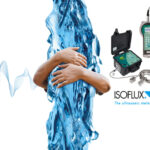 The first step towards a reduction of waste and a better management of the water resource is to make citizens aware of their real consumption: very useful for this purpose are the water metering systems, which make it possible to know exactly the amount of water supplied by each housing unit and to distribute the costs appropriately.
For information about ISOIL Industria smart water metering systems, do not hesitate to contact us.